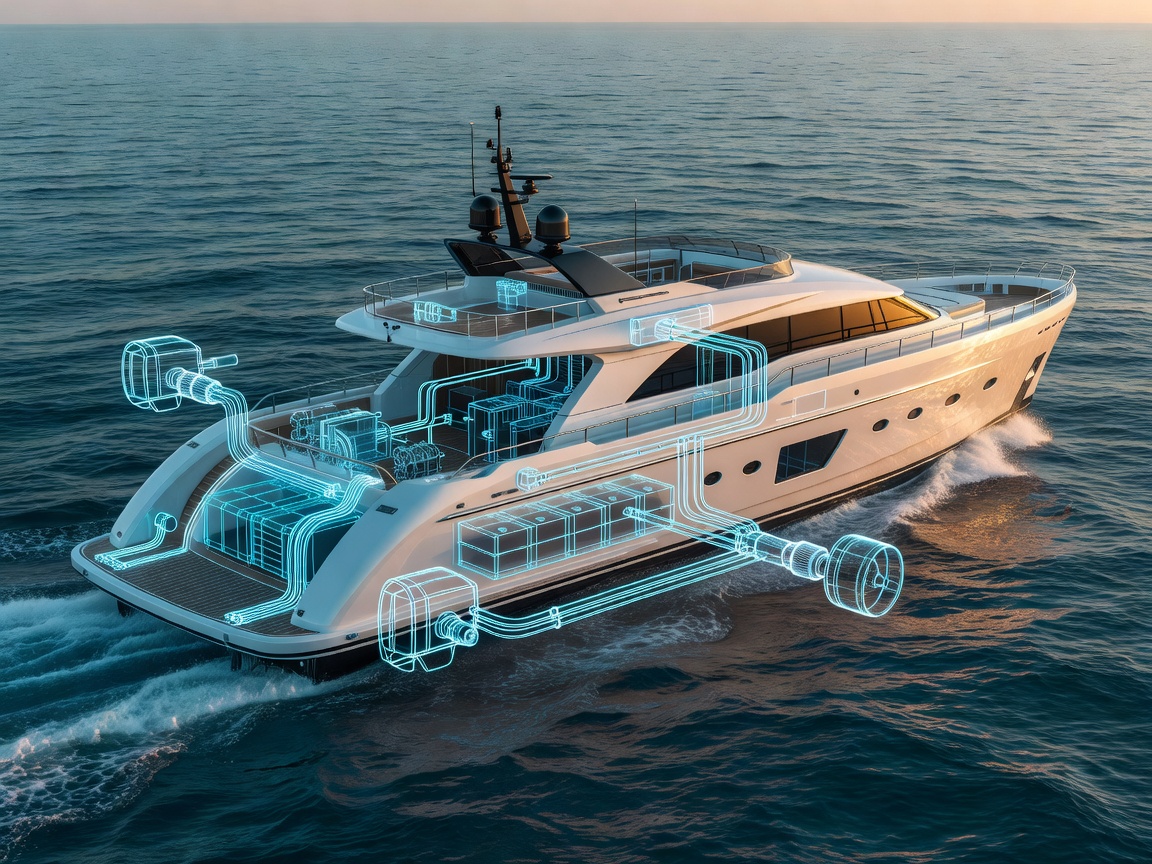
The marine industry faces a profound challenge: water is heavy, and moving through it requires staggering amounts of energy. Traditional displacement superyachts burn thousands of liters of fossil fuel simply to overcome the resistance of pushing water out of their path. Foiling technology fundamentally rewrites the marine efficiency equation by replacing hydrodynamic hull drag with highly efficient aerodynamic and localized foil drag.
The End of Wave-Making Drag
When a conventional vessel moves through water, it generates a bow wave. As the vessel's speed increases, the wavelength of this bow wave extends. Eventually, the yacht becomes trapped in the trough of its own wave—a barrier known as "hull speed." Pushing past this speed requires an exponential increase in power.
By lifting the hull entirely above the surface, a foiling superyacht bypasses the hull speed limitation. Wave-making drag drops to near zero. The only remaining hydrodynamic drag acts upon the slender struts and the foils themselves. This massive reduction in resistance means that the energy required to cruise at 30 knots in a foiling yacht is often less than the energy required to push a standard hull at 15 knots.
Enabling Electric Propulsion
The primary barrier to fully electric superyachts has always been battery energy density. While liquid fuels pack immense energy into a small space, current lithium-ion battery technology is comparatively heavy and bulky. A traditional yacht requiring massive horsepower to overcome drag simply cannot carry enough batteries to achieve a meaningful range.
Foiling changes the math. By slashing the power requirements for cruising, foiling brings the necessary battery banks down to a manageable size and weight. Hybrid-electric foiling systems are now entering the market, allowing a vessel to maneuver silently in marinas on pure electric power, utilize diesel generators for extended offshore ranges, and cruise highly efficiently on foil using a fraction of the total installed horsepower.
Propulsion Integration in Foil Systems
Getting power to the water when the hull is suspended meters above the surface presents a unique engineering challenge. Traditional shaft drives are useless when the hull is airborne. Modern architects solve this via two primary methods:
- Integrated Pod Drives: Electric motors are housed in torpedo-like pods directly integrated into the intersection of the foil struts and the lifting wings. This places the propeller directly in clean, undisturbed water flow, maximizing thrust efficiency and eliminating the need for long mechanical drivetrains.
- Z-Drive Transmissions: Power generated in the hull (via internal combustion or inboard electric motors) is transferred down the strut using complex right-angle gearboxes. While mechanically complex, this keeps heavy motors inside the hull, optimizing the yacht's center of gravity.
The Take-Off Power Spike
It is important to note that foiling is not universally efficient across all speeds. The vessel experiences peak drag immediately prior to take-off. The hull is still in the water, generating wave drag, while the foils are fully deployed, adding their own hydrodynamic resistance. To overcome this "hump," the yacht requires a significant, momentary surge of power. Once airborne, the captain can throttle back drastically while maintaining or increasing speed.
Engineers manage this power spike by utilizing high-torque electric motors, which can deliver 100% of their available torque from zero RPM, making them vastly superior to traditional diesel engines for the specific task of hauling a heavy vessel out of the water.