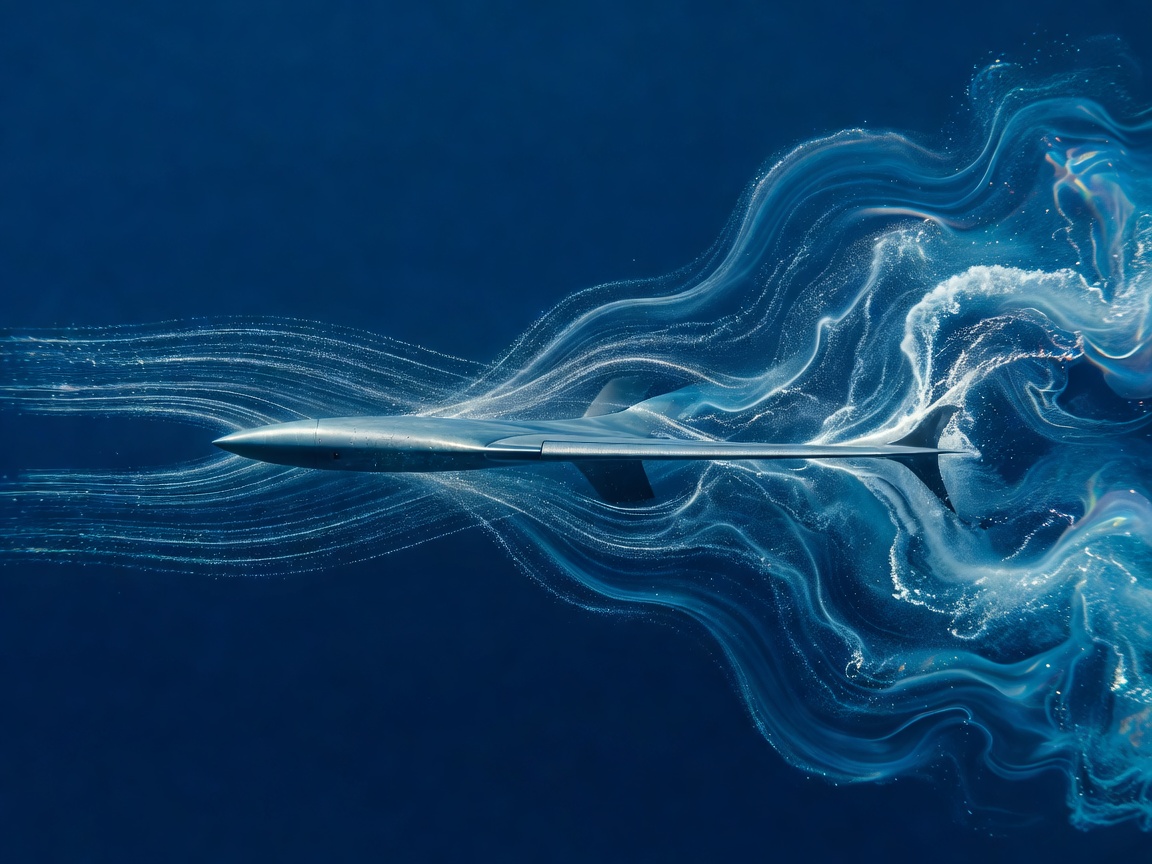
Lifting a superyacht out of the water is a monumental feat of engineering. The core principle remains identical to that of an aircraft wing generating lift in the air, but the medium—water—is approximately 800 times denser. This immense density means marine foils can be vastly smaller than airplane wings to generate the same amount of lift. However, it also introduces unique challenges such as cavitation, extreme dynamic loading, and complex multi-phase fluid dynamics.
The Physics of Marine Flight
Hydrodynamic lift is governed by Bernoulli's principle and Newton's third law. As water flows over the specifically contoured asymmetrical shape of a hydrofoil, the flow splits. Water traveling over the curved upper surface accelerates, causing a drop in pressure relative to the slower-moving water beneath the flat lower surface. This pressure differential exerts an upward force on the foil.
When the vessel reaches a specific threshold known as "take-off speed," the upward hydrodynamic lift exceeds the static weight of the yacht. At this precise moment, the hull breaks free from the surface. The sudden elimination of wave-making drag and vast reduction in wetted surface area causes the required thrust to plummet. Maintaining flight requires only a fraction of the energy needed to initially breach the surface.
Foil Configurations for Superyachts
Naval architects generally choose between three primary foil configurations when designing large-scale foiling craft. Each presents a different balance of stability, efficiency, and engineering complexity.
1. Surface-Piercing Foils (V-Foils)
Surface-piercing foils intersect the water's surface, typically in a V-shape. They are inherently self-stabilizing. As the yacht speeds up and rises, less of the foil remains submerged. This automatic reduction in wetted lifting area naturally balances the lifting force with the vessel's weight, negating the need for complex computer-controlled flaps. However, because they pierce the surface, they are susceptible to surface ventilation (air being sucked down the foil strut, destroying lift) and can offer a harsher ride in choppy conditions.
2. Fully Submerged Foils (T-Foils)
Fully submerged foils, frequently taking the shape of an inverted 'T', operate entirely below the surface chop. This isolation from surface dynamics ensures an extraordinarily smooth ride, completely unbothered by surface waves. However, because their lifting area does not change as the boat rises, they possess zero inherent stability. A T-foil yacht relies entirely on active flight control systems—computers analyzing pitch, roll, and heave hundreds of times per second—to adjust trailing-edge flaps and maintain stable flight.
3. U-Foils and J-Foils
Commonly seen in competitive racing but increasingly adapted for luxury applications, these curved foils offer a compromise. They can be articulated to alter their lift characteristics and are often used as lifting daggerboards that curve underneath the hull. While complex to manufacture, they offer excellent righting moments and roll stability.
Cavitation: The Speed Limit of the Sea
As yachts push past 40 knots, engineers must combat cavitation. If water accelerates too rapidly over the top of a foil, the local pressure can drop below the vapor pressure of water. The water essentially boils at ambient temperature, forming vapor bubbles. When these bubbles migrate to higher-pressure areas toward the trailing edge, they collapse violently. This collapse creates micro-jets that can pit and destroy even the strongest marine alloys, while simultaneously ruining the foil's lift characteristics.
To exceed these speeds, architects must design "super-cavitating" foils—wedge-shaped profiles designed to force the cavitation bubble to envelop the entire trailing edge of the foil, collapsing harmlessly in the wake behind the vessel rather than against the metal itself. While effective for extreme speed, super-cavitating foils are notoriously inefficient at lower speeds, making them a difficult choice for standard luxury cruising.
Active Flight Control Systems
Modern foiling superyachts are fly-by-wire vessels. The captain commands the desired heading and altitude, but a centralized computer executes the mechanics. Inertial Measurement Units (IMUs), highly precise gyroscopes, and ultrasonic height sensors feed continuous data streams to the main processor. If a rogue wave approaches, the system detects the change in surface proximity and adjusts the foil flaps in milliseconds to heave the yacht over the crest, ensuring the champagne glasses on the aft deck remain completely undisturbed.